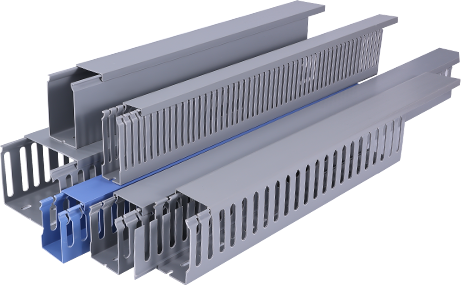

In the rapidly evolving landscape of smart factory automation, where precision, efficiency, and connectivity are paramount, the role of wiring duct cannot be overstated. Often overlooked in favor of more glamorous technologies like AI-driven robotics or IoT sensors, wiring duct serves as the backbone of industrial connectivity, ensuring seamless data transmission and electrical distribution across complex manufacturing environments.
At its core, wiring duct is a specialized channel designed to organize, protect, and route electrical cables and data wires in industrial settings. Unlike conventional cable management solutions, modern wiring duct systems are engineered to meet the unique demands of smart factories—where high-speed data transfer, electromagnetic interference (EMI) protection, and scalability are critical. These ducts are typically constructed from durable materials such as PVC, aluminum, or steel, offering resistance to harsh industrial conditions including temperature fluctuations, chemical exposure, and mechanical stress.
One of the key advantages of wiring duct in smart factory automation is its ability to streamline cable organization. In traditional manufacturing facilities, tangled wires and disorganized cabling not only hinder maintenance efforts but also increase the risk of downtime due to accidental disconnections or short circuits. Wiring duct systems, with their modular design and customizable configurations, allow engineers to neatly arrange power cables, communication lines, and sensor wires in separate compartments. This segregation minimizes cross-talk between different signal types, ensuring reliable data transmission between IoT devices, PLCs (Programmable Logic Controllers), and other automation components.
Moreover, wiring duct plays a crucial role in enhancing safety in smart factories. By enclosing cables within robust channels, these systems prevent accidental contact with live wires, reducing the risk of electrical hazards for maintenance personnel. Additionally, some advanced wiring duct models feature flame-retardant properties, further mitigating fire risks in environments where flammable materials are present. This safety aspect is particularly important in industries such as automotive manufacturing or chemical processing, where even minor electrical incidents can lead to catastrophic consequences.
Scalability is another critical factor driving the adoption of wiring duct in smart factory automation. As manufacturing facilities expand or upgrade their automation systems, the need for additional cabling grows exponentially. Wiring duct’s modular design allows for easy expansion—new sections can be added or modified without disrupting existing operations. This flexibility ensures that factories can adapt to changing production requirements without incurring significant downtime or reconfiguration costs. For example, when integrating new robotic arms or IoT sensors, engineers can simply extend the existing wiring duct network to accommodate the additional cables, maintaining the integrity of the overall system.
In the context of Industry 4.0, where data is the lifeblood of manufacturing, wiring duct also contributes to improved data integrity. High-speed communication protocols like Ethernet/IP or PROFINET require stable, interference-free transmission paths to ensure real-time monitoring and control of production processes. Wiring duct systems with shielded compartments or metal enclosures provide effective EMI protection, shielding sensitive data cables from electromagnetic interference generated by nearby power lines or industrial machinery. This ensures that critical data—such as sensor readings, machine performance metrics, and production status updates—is transmitted accurately and without delay, enabling factories to optimize operations and make data-driven decisions.
Beyond its functional benefits, wiring duct also supports sustainability initiatives in smart factories. By organizing cables efficiently, these systems reduce the need for excess wiring, minimizing material waste. Additionally, the durable construction of modern wiring duct ensures a longer lifespan, reducing the frequency of replacements and contributing to a circular economy. Some manufacturers even offer recyclable wiring duct materials, further aligning with the environmental goals of forward-thinking industrial facilities.
In conclusion, wiring duct for smart factory automation is far more than a simple cable management tool—it is an essential component that enables the seamless integration of advanced technologies, enhances safety, and supports scalability in modern manufacturing environments. As smart factories continue to evolve, the demand for innovative wiring duct solutions will only grow, driven by the need for more efficient, reliable, and sustainable industrial connectivity. By investing in high-quality wiring duct systems, manufacturers can lay the foundation for a future-ready factory—one that is agile, efficient, and capable of meeting the challenges of Industry 4.0 head-on.