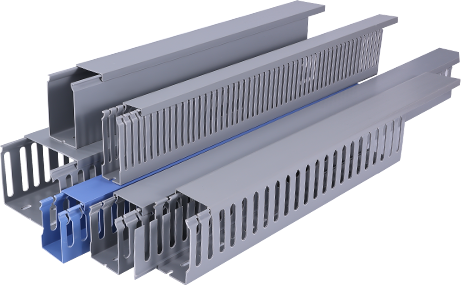

Asia has emerged as the global epicenter for wiring duct manufacturing, with a network of factories spanning countries like China, Vietnam, Malaysia, and Thailand. These facilities have transformed the region into a hub for electrical infrastructure components, serving both domestic markets and international clients.
The growth of wiring duct factories in Asia can be attributed to several key factors. First, the region offers competitive production costs, including lower labor expenses and access to raw materials. This cost advantage has attracted manufacturers from around the world, who have set up operations to capitalize on Asia's manufacturing capabilities. Additionally, governments in many Asian countries have implemented policies to support industrial development, providing tax incentives, infrastructure improvements, and streamlined regulatory processes.
China, in particular, has become a major player in the wiring duct industry. With its vast manufacturing base and advanced production technologies, Chinese factories produce a wide range of wiring duct products, from standard PVC ducts to specialized metal and fiberglass options. These factories not only cater to the domestic market but also export to North America, Europe, and other regions, meeting global demand for high-quality electrical components.
Vietnam and Malaysia have also seen significant growth in their wiring duct manufacturing sectors. These countries offer a combination of skilled labor, strategic geographic locations, and favorable business environments. Many international companies have established joint ventures or wholly-owned subsidiaries in these regions, leveraging local expertise while maintaining global quality standards.
The products manufactured by Asian wiring duct factories are used in a variety of applications, including commercial buildings, industrial facilities, and residential construction. They play a crucial role in organizing and protecting electrical wiring, ensuring safety and efficiency in electrical systems. As the demand for smart buildings and sustainable infrastructure continues to grow, the need for advanced wiring duct solutions is expected to increase, driving further expansion in the industry.
Quality control is a top priority for Asian wiring duct factories. Many facilities have implemented ISO standards and other quality management systems to ensure that their products meet international specifications. This commitment to quality has helped Asian manufacturers gain a reputation for reliability and consistency, making them preferred suppliers for global customers.
Innovation is another key driver of growth in the Asian wiring duct industry. Factories are investing in research and development to create new products that meet evolving market needs. For example, some manufacturers are developing eco-friendly wiring ducts made from recycled materials, responding to the growing demand for sustainable solutions. Others are incorporating smart technologies into their products, such as integrated sensors for monitoring electrical systems.
The future of wiring duct factories in Asia looks promising. With ongoing investments in technology, infrastructure, and workforce development, the region is well-positioned to maintain its leadership in the global market. As the world becomes more connected and electrical infrastructure becomes increasingly complex, the demand for high-quality wiring duct products will continue to rise, providing opportunities for Asian manufacturers to expand their reach and influence.
In conclusion, the rise of wiring duct factories in Asia is a testament to the region's manufacturing prowess and its ability to adapt to changing market demands. With a focus on quality, innovation, and cost efficiency, Asian factories are playing a vital role in shaping the future of the global electrical industry. As the world continues to rely on advanced electrical infrastructure, the importance of these factories will only grow, solidifying Asia's position as a global manufacturing powerhouse.