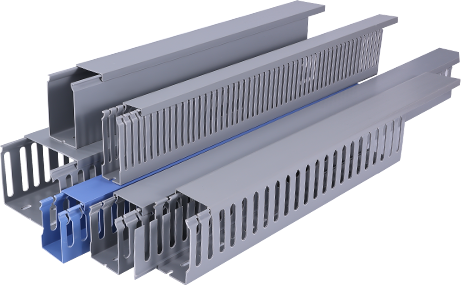

In the era of Industry 4.0, smart factory automation has become the cornerstone of modern manufacturing. As factories increasingly integrate advanced technologies like IoT, AI, and robotics, the need for efficient and organized wiring systems has never been more critical. This is where wiring duct for smart factory automation comes into play, serving as the backbone of electrical infrastructure in these high-tech environments.
Wiring duct, also known as cable management duct or wire raceway, is a system designed to organize, protect, and route electrical cables and wires in industrial settings. In smart factories, where numerous sensors, actuators, and control systems are interconnected, proper cable management is essential for maintaining operational efficiency, minimizing downtime, and ensuring safety. Unlike traditional factories, smart factories generate a massive amount of data through interconnected devices, requiring a robust and flexible wiring infrastructure that can accommodate dynamic changes in production processes.
One of the key advantages of using wiring duct in smart factory automation is its ability to streamline cable organization. In a typical smart factory, hundreds or even thousands of cables may be required to connect various components, including PLCs (Programmable Logic Controllers), HMI (Human-Machine Interface) panels, sensors, and robotic arms. Without proper organization, these cables can become tangled, leading to difficulties in maintenance, troubleshooting, and upgrades. Wiring duct provides a structured pathway for cables, allowing for easy identification, access, and modification. This not only reduces the time spent on maintenance tasks but also minimizes the risk of accidental cable damage, which can cause costly production interruptions.
Another important benefit of wiring duct is its role in enhancing safety. In industrial environments, electrical cables are exposed to various hazards, such as mechanical damage, dust, moisture, and temperature fluctuations. Wiring duct acts as a protective barrier, shielding cables from these elements and reducing the risk of electrical fires, short circuits, and other safety incidents. Additionally, by keeping cables organized and out of the way, wiring duct helps prevent tripping hazards, ensuring a safer working environment for factory personnel.
Flexibility is another crucial feature of wiring duct for smart factory automation. As smart factories evolve and adapt to changing production needs, the wiring infrastructure must be able to accommodate new devices and technologies. Wiring duct systems are designed with modular components that can be easily expanded, modified, or reconfigured. This flexibility allows factories to scale their automation systems without the need for extensive rewiring, saving time and resources. For example, if a new robotic arm is added to a production line, the existing wiring duct can be extended or modified to accommodate the additional cables, ensuring seamless integration with minimal disruption.
In addition to organization, safety, and flexibility, wiring duct also contributes to the overall aesthetics of the factory floor. A well-organized wiring system not only improves functionality but also creates a more professional and efficient-looking workspace. This can have a positive impact on employee morale and productivity, as a clean and organized environment is often associated with higher levels of efficiency and attention to detail.
When selecting wiring duct for smart factory automation, several factors should be considered. First, the material of the duct is important. Common materials include PVC, metal, and fiberglass, each with its own advantages. PVC duct is lightweight, cost-effective, and resistant to corrosion, making it suitable for most indoor applications. Metal duct, on the other hand, offers greater durability and protection against mechanical damage, making it ideal for harsh industrial environments. Fiberglass duct is non-conductive and heat-resistant, making it suitable for high-temperature applications.
Another factor to consider is the size and configuration of the duct. The duct should be large enough to accommodate the number and size of cables required, while also allowing for future expansion. Additionally, the duct should be designed with appropriate access points, such as removable covers or slots, to facilitate easy installation and maintenance. Some wiring duct systems also come with built-in cable management features, such as cable ties or clips, to further organize and secure the cables.
In conclusion, wiring duct is an essential component of smart factory automation, providing a structured, safe, and flexible solution for managing electrical cables. By investing in high-quality wiring duct systems, factories can optimize their automation processes, reduce downtime, and enhance overall operational efficiency. As the manufacturing industry continues to embrace Industry 4.0, the role of wiring duct in smart factory automation will only become more important, ensuring that factories remain competitive and efficient in the digital age.