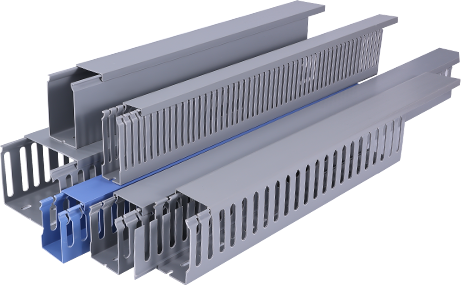

Wiring duct for rail transit systems represents a critical yet often overlooked component in modern transportation infrastructure. These specialized cable management systems are designed to protect, organize, and route electrical and communication wires throughout trains, stations, and trackside facilities. As rail transit networks expand to meet growing urban mobility demands, the importance of robust wiring duct solutions cannot be overstated.
Rail transit environments present unique challenges for electrical systems. Vibration from moving trains, temperature fluctuations, exposure to moisture and dust, and the need for high reliability under continuous operation all require specialized cable management. Wiring duct systems address these challenges by providing a protective enclosure for wires while maintaining accessibility for maintenance and upgrades. They prevent wire damage, reduce the risk of electrical fires, and ensure consistent performance of critical systems such as signaling, communication, and passenger information displays.
The design of wiring duct for rail transit must adhere to stringent industry standards and safety regulations. Materials used in these systems are carefully selected to withstand harsh operating conditions. Flame-retardant plastics, corrosion-resistant metals, and impact-resistant composites are common choices, each offering specific advantages depending on the application. For example, aluminum wiring duct provides excellent heat dissipation and mechanical strength, making it suitable for high-power applications, while PVC-based ducting offers cost-effectiveness and ease of installation for less demanding environments.
Installation of wiring duct in rail transit systems requires careful planning and execution. Engineers must consider factors such as wire capacity, bend radius requirements, and accessibility for future maintenance. Proper routing ensures that cables are protected from physical damage while maintaining optimal signal integrity. In rolling stock applications, wiring duct must be securely fastened to withstand constant vibration and movement, often requiring specialized mounting hardware and vibration-dampening solutions.
Beyond physical protection, wiring duct systems contribute to overall system efficiency. Well-organized cable routing reduces signal interference, improves energy efficiency, and simplifies troubleshooting and repairs. In emergency situations, clear and accessible wiring duct can mean the difference between a minor disruption and a major system failure. Maintenance crews can quickly identify and address issues without extensive disassembly, minimizing downtime and ensuring passenger safety.
The evolution of rail transit technology has driven innovations in wiring duct design. Modern systems now incorporate features such as modular components, snap-fit connections, and integrated labeling systems to enhance installation speed and reduce human error. Some advanced wiring duct solutions even include built-in monitoring capabilities, allowing for real-time detection of temperature changes or cable degradation.
Sustainability has also become a key consideration in wiring duct design for rail transit. Manufacturers are increasingly using recycled materials and developing systems that minimize waste during installation and maintenance. Energy-efficient lighting and signaling systems, supported by optimized wiring duct, contribute to overall reduced energy consumption in rail operations.
In conclusion, wiring duct for rail transit plays a vital role in ensuring the safety, reliability, and efficiency of modern transportation systems. As cities continue to invest in rail infrastructure to reduce congestion and environmental impact, the demand for advanced wiring duct solutions will only grow. By combining robust design, high-quality materials, and innovative features, these systems provide the backbone for the complex electrical networks that power our rail transit systems, keeping passengers safe and connected while supporting sustainable urban development.