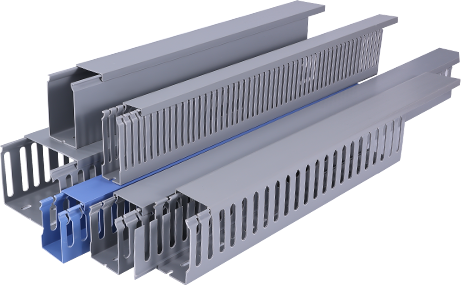

In the world of industrial machinery and equipment, effective cable management is often an overlooked yet critical component of operational efficiency and safety. Wiring duct for machinery and equipment has emerged as a cornerstone solution, providing organized pathways for electrical and communication cables in various industrial settings. This comprehensive system not only enhances safety standards but also simplifies maintenance procedures and optimizes overall performance.
Wiring duct, also known as cable duct or wire duct, is a specialized channel designed to contain, route, and protect electrical wires and cables in machinery and equipment. It comes in various materials, including PVC, metal, and fiberglass, each offering distinct advantages based on specific application requirements. The primary purpose of these ducts is to prevent cable damage from environmental factors, mechanical stress, and human interference, while also facilitating easy identification and access to cables when maintenance is required.
The implementation of wiring duct in machinery and equipment brings multiple benefits. First and foremost, it significantly reduces the risk of electrical hazards. By organizing cables in a structured manner, it minimizes the potential for short circuits, overheating, and accidental contact with live wires. This is particularly crucial in high-voltage industrial environments where safety is paramount. Additionally, wiring duct simplifies troubleshooting processes, as technicians can quickly locate and access specific cables without disrupting the entire system.
Another key advantage of wiring duct for machinery and equipment is its contribution to space optimization. In complex industrial setups, cables can quickly become tangled and occupy valuable space, leading to inefficiencies and increased maintenance time. Wiring duct provides a systematic approach to cable routing, ensuring that cables are neatly arranged and do not interfere with other components. This not only improves the overall aesthetics of the machinery but also enhances airflow and cooling, which is essential for maintaining optimal performance.
When selecting wiring duct for machinery and equipment, several factors must be considered. The material choice depends on the operating environment—for example, metal ducts are ideal for high-temperature applications, while PVC ducts offer excellent corrosion resistance in humid or chemical-prone areas. The size and configuration of the duct should also align with the number and type of cables being managed, ensuring sufficient space for current and future expansion.
Installation of wiring duct requires careful planning and execution. Proper measurement and layout are essential to ensure that the duct system effectively accommodates all cables while allowing for easy access. It is also important to secure the ducts firmly to prevent movement or displacement during operation, which could lead to cable damage. Regular maintenance, including cleaning and inspection, is necessary to ensure the longevity and performance of the wiring duct system.
In conclusion, wiring duct for machinery and equipment is an indispensable tool in modern industrial settings. Its ability to organize, protect, and manage cables not only enhances safety and efficiency but also contributes to the overall reliability of machinery and equipment. As industries continue to evolve and adopt more complex electrical systems, the importance of effective cable management through wiring duct will only grow. Investing in high-quality wiring duct solutions is a proactive step toward ensuring the smooth operation and longevity of industrial machinery and equipment.