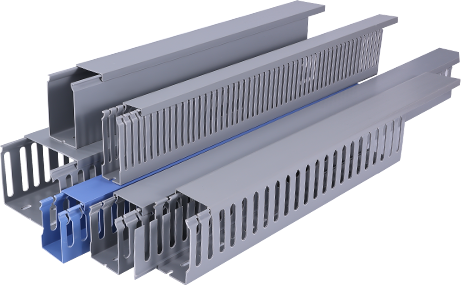

Wire duct, also known as wire trough or cable tray, is an indispensable component in modern electrical installations. This versatile system provides a structured and organized way to route, protect, and manage electrical wires and cables in residential, commercial, and industrial settings.
Designed to accommodate multiple wires in a single channel, wire duct systems offer numerous advantages over traditional wiring methods. They simplify installation, enhance safety, and facilitate future modifications or expansions. The modular design allows for easy customization, making them suitable for projects of all sizes and complexities.
One of the primary benefits of wire duct is its ability to protect electrical conductors from physical damage. By encasing wires in a durable plastic or metal channel, they are shielded from impact, abrasion, and environmental factors. This protection is particularly crucial in industrial environments where heavy machinery and constant foot traffic pose significant risks to exposed wiring.
Wire duct systems also contribute to improved fire safety. Many models are constructed from flame-retardant materials that resist ignition and slow the spread of fire. This feature is especially important in commercial buildings and high-rise structures where fire containment is a critical safety consideration.
Installation of wire duct follows a systematic process. First, the layout is planned to determine the optimal path for the wiring. The duct sections are then cut to the required lengths and secured to walls, ceilings, or other surfaces using appropriate mounting hardware. Wires are carefully routed through the duct, and access points are strategically placed to allow for maintenance and troubleshooting.
The versatility of wire duct is evident in its various configurations. Different widths, heights, and materials are available to accommodate specific project requirements. Slotted or solid covers provide additional protection while allowing for easy access when needed. Some systems even include built-in dividers to separate different types of wiring, preventing interference and simplifying identification.
In industrial applications, wire duct systems play a vital role in maintaining operational efficiency. They organize complex wiring networks, reducing the risk of downtime caused by accidental wire damage or disconnection. The clear labeling and structured layout also facilitate quick identification and replacement of faulty components, minimizing repair time and associated costs.
For residential applications, wire duct offers a neat and professional alternative to exposed wiring. Homeowners and contractors appreciate the clean appearance and the ability to easily upgrade or modify electrical systems as needs change. The flexibility of wire duct makes it ideal for home automation projects where additional wiring may be required in the future.
As technology continues to advance, wire duct systems are evolving to meet new challenges. Manufacturers are developing innovative materials and designs that enhance performance while reducing environmental impact. Some modern wire duct systems incorporate smart features, such as integrated sensors that monitor temperature and humidity, providing real-time data for predictive maintenance.
In conclusion, wire duct is more than just a channel for electrical wires—it is a comprehensive solution that enhances safety, improves organization, and simplifies maintenance. Whether in a small residential project or a large-scale industrial installation, wire duct systems provide a reliable and efficient way to manage electrical infrastructure. As building codes and safety standards become more stringent, the importance of proper wire management will only continue to grow, making wire duct an essential component in the future of electrical engineering.