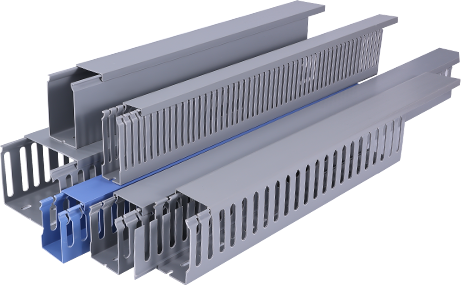

In the dynamic landscape of modern industrial operations, the organization and protection of electrical wiring play a critical role in ensuring both operational efficiency and workplace safety. Flexible wiring duct for industrial use has emerged as a cornerstone solution, revolutionizing how industries manage their electrical infrastructure. This versatile component not only streamlines installation processes but also provides robust protection against environmental hazards, making it an indispensable asset in manufacturing facilities, warehouses, and other industrial settings.
Industrial environments are characterized by constant movement, heavy machinery, and exposure to various elements such as dust, moisture, and temperature fluctuations. Traditional rigid wiring systems often struggle to adapt to these conditions, leading to frequent maintenance issues and potential safety risks. Flexible wiring duct addresses these challenges by offering a pliable yet durable housing for electrical cables. Its flexibility allows for easy routing around obstacles, machinery, and tight spaces, eliminating the need for complex and costly modifications to existing layouts. This adaptability is particularly valuable in industries where production lines are frequently reconfigured to accommodate new processes or equipment.
One of the key advantages of flexible wiring duct for industrial use is its ability to protect cables from physical damage. In high-traffic areas, cables are vulnerable to being crushed by heavy equipment, snagged by moving parts, or accidentally cut during maintenance activities. The duct's robust construction, typically made from high-quality materials like PVC or flame-retardant polymers, creates a protective barrier that shields wires from these threats. Additionally, many models are designed to be resistant to oils, chemicals, and UV radiation, ensuring long-term durability even in harsh industrial environments.
Safety is another paramount consideration in industrial settings, and flexible wiring duct contributes significantly to reducing electrical hazards. By enclosing cables within a secure channel, it minimizes the risk of accidental contact with live wires, which can lead to electric shocks or fires. The duct also helps prevent cable tangling, a common issue that can cause short circuits or overheating. Furthermore, some types of flexible wiring duct are designed with flame-retardant properties, adding an extra layer of protection against fire outbreaks, which is crucial in environments where flammable materials are present.
Installation and maintenance efficiency are also greatly enhanced by the use of flexible wiring duct. Unlike rigid conduit systems that require precise measurements and cutting, flexible duct can be easily adjusted to fit any length or path, significantly reducing installation time and labor costs. Its modular design allows for quick access to cables when modifications or repairs are needed, eliminating the need to dismantle entire sections of the wiring system. This accessibility is particularly beneficial in industries where downtime must be minimized to maintain productivity.
In addition to its functional benefits, flexible wiring duct also contributes to a more organized and aesthetically pleasing workspace. By concealing cables within a neat, uniform channel, it reduces visual clutter and creates a more professional appearance. This organization not only improves the overall look of the facility but also makes it easier for maintenance personnel to identify and access specific cables, further streamlining repair and upgrade processes.
The versatility of flexible wiring duct for industrial use extends to its compatibility with various cable types and sizes. Whether housing power cables, control wires, or data cables, the duct can be customized to accommodate different diameters and quantities, making it suitable for a wide range of applications. Some models even feature split designs or removable lids, allowing for easy insertion and removal of cables without disrupting the entire system.
As industries continue to embrace automation and digitalization, the demand for reliable and flexible wiring solutions is expected to grow. Flexible wiring duct for industrial use is well-positioned to meet this demand, offering a combination of adaptability, protection, and efficiency that traditional systems cannot match. Its ability to support the evolving needs of modern manufacturing processes, from robotics and IoT integration to renewable energy systems, underscores its importance in building resilient and future-proof industrial infrastructures.
In conclusion, flexible wiring duct for industrial use is more than just a cable management tool—it is a strategic investment that enhances operational efficiency, improves workplace safety, and reduces long-term maintenance costs. Its flexibility, durability, and adaptability make it an ideal solution for the challenges of modern industrial environments. As industries strive to optimize their operations and ensure compliance with safety standards, the adoption of flexible wiring duct will undoubtedly continue to rise, solidifying its status as a fundamental component in industrial electrical systems.