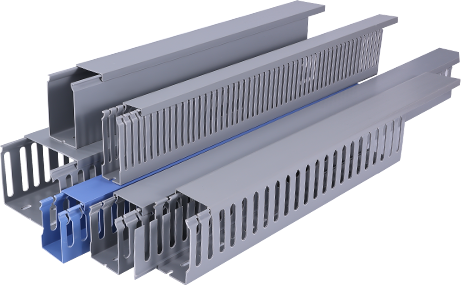

Flexible wiring duct has emerged as an essential component in modern electrical and data management systems, offering a versatile and efficient solution for organizing and protecting cables. Unlike rigid conduit systems, flexible wiring duct provides a dynamic approach to cable routing, making it ideal for applications where flexibility, adaptability, and space efficiency are critical. This comprehensive guide explores the key features, benefits, and applications of flexible wiring duct, highlighting its role in enhancing safety, organization, and aesthetics in various environments.
At its core, flexible wiring duct is a pliable, tubular structure designed to enclose and protect electrical cables, data lines, and communication wires. It is typically made from durable materials such as PVC, polyethylene, or thermoplastic elastomers, which provide excellent resistance to impact, chemicals, and environmental factors. The duct's flexibility allows it to bend and twist around obstacles, making it suitable for complex routing paths in tight spaces. This adaptability is particularly valuable in industrial settings, commercial buildings, and residential installations where traditional rigid conduit may be impractical or restrictive.
One of the primary advantages of flexible wiring duct is its ability to simplify cable management. By consolidating multiple cables into a single duct, it reduces clutter and minimizes the risk of tangling, which can lead to signal interference, overheating, or electrical hazards. The duct's smooth interior surface also facilitates easy installation and maintenance, allowing technicians to add or remove cables without disrupting the entire system. Additionally, many flexible wiring ducts feature slit designs or removable covers, enabling quick access to cables for troubleshooting or upgrades.
Safety is another key benefit of flexible wiring duct. By enclosing cables, it provides a physical barrier against moisture, dust, and mechanical damage, which can compromise the integrity of electrical systems. In environments where fire safety is a concern, flame-retardant versions of flexible wiring duct are available, helping to prevent the spread of fire and smoke. This is especially important in commercial buildings, data centers, and industrial facilities where electrical systems are critical to operations.
The versatility of flexible wiring duct extends to a wide range of applications. In industrial settings, it is used to route cables in machinery, conveyor systems, and automated equipment, where movement and vibration are common. In commercial buildings, it helps organize data and power cables in offices, retail spaces, and server rooms, improving both functionality and aesthetics. Residential applications include home theater setups, smart home installations, and basement wiring, where a clean and organized cable management system is desired.
When selecting flexible wiring duct, several factors should be considered. The size and capacity of the duct must match the number and type of cables being routed, ensuring adequate space for airflow and future expansion. Material selection is also important, with options ranging from standard PVC for general use to specialized materials for high-temperature or chemical-resistant environments. Additionally, the duct's flexibility and bend radius should be compatible with the intended installation path, ensuring smooth routing without kinking or damage to cables.
Installation of flexible wiring duct is relatively straightforward, but proper planning is essential. It is important to map out the cable routing path, taking into account any obstacles or bends. The duct can be secured using clips, straps, or adhesive mounts, depending on the surface and application. For optimal performance, it is recommended to leave some slack in the duct to accommodate cable movement and future adjustments. Regular maintenance, including periodic inspections and cleaning, helps ensure the duct remains in good condition and continues to protect cables effectively.
In conclusion, flexible wiring duct represents a significant advancement in cable management technology, offering a flexible, durable, and cost-effective solution for organizing and protecting electrical and data cables. Its adaptability, safety features, and wide range of applications make it an essential tool for modern electrical systems. Whether in industrial, commercial, or residential settings, flexible wiring duct helps improve efficiency, reduce risks, and enhance the overall functionality and aesthetics of cable management systems. As technology continues to evolve, the demand for flexible wiring duct is likely to grow, driven by the need for more efficient and reliable cable management solutions in an increasingly connected world.