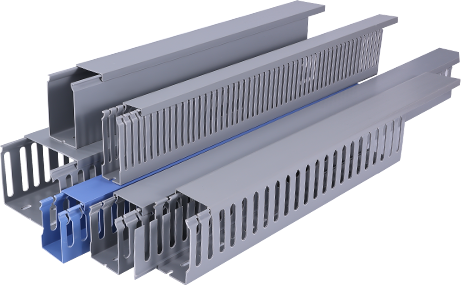

In the intricate web of global industrial infrastructure, the industrial wiring duct factory stands as a cornerstone, producing essential components that organize and protect electrical systems across diverse sectors. These specialized manufacturing facilities have evolved significantly over the decades, transitioning from manual production lines to highly automated operations that prioritize precision, sustainability, and customization.\r \r At the heart of any industrial wiring duct factory lies its commitment to material science. Modern factories primarily utilize high-quality PVC, aluminum, and steel, each selected for specific performance attributes. PVC ducts, for instance, offer excellent insulation properties and corrosion resistance, making them ideal for indoor applications, while aluminum variants provide lightweight durability suitable for aerospace and automotive industries. Steel ducts, with their exceptional strength, cater to heavy-duty industrial environments where mechanical stress is a constant concern. The factory's material selection process involves rigorous testing to ensure compliance with international standards such as UL, CE, and RoHS, guaranteeing that each product meets stringent safety and environmental requirements.\r \r Automation has revolutionized the production workflow within these factories. Computer Numerical Control (CNC) machines now handle cutting, shaping, and perforating tasks with micron-level accuracy, reducing human error and increasing production efficiency by up to 60% compared to traditional methods. Robotic arms equipped with vision systems precisely assemble components, while automated quality control stations use laser scanning and pressure testing to detect even the slightest imperfections. This technological integration not only accelerates production cycles but also enables factories to offer highly customized solutions, from unique dimensions to specialized surface treatments like anti-static coatings or flame retardant finishes.\r \r Sustainability has emerged as a defining focus for contemporary industrial wiring duct factories. Many facilities have adopted circular economy principles, implementing closed-loop systems that recycle production waste into raw materials. For example, scrap PVC from cutting processes is ground into pellets and reintroduced into the extrusion line, reducing material waste by approximately 30%. Solar panels adorn factory rooftops, powering a significant portion of operations, while water recycling systems minimize consumption in cooling and cleaning processes. These eco-friendly initiatives not only reduce the factory's carbon footprint but also resonate with clients increasingly prioritizing green supply chains.\r \r The global supply chain dynamics have also reshaped the operational strategies of industrial wiring duct factories. Proximity to raw material sources and target markets has become a critical consideration, with many factories establishing regional production hubs to reduce transportation costs and lead times. For instance, factories in Southeast Asia leverage the region's abundant PVC resin supplies and skilled labor force, while those in North America focus on serving the robust aerospace and automotive sectors with just-in-time delivery models. This geographic diversification ensures that factories can adapt quickly to market fluctuations and regulatory changes in different regions.\r \r Workforce development remains a key pillar of factory excellence. Modern facilities invest heavily in training programs that equip employees with skills in advanced manufacturing technologies, quality management systems, and lean production methodologies. Cross-functional teams collaborate seamlessly, from design engineers who create 3D models using CAD software to production supervisors who optimize workflow layouts using simulation tools. This human-machine synergy fosters a culture of continuous improvement, where employees contribute innovative ideas to enhance product performance and manufacturing efficiency.\r \r Looking ahead, the industrial wiring duct factory is poised for further transformation. The integration of Internet of Things (IoT) sensors into production equipment will enable real-time monitoring of machine performance, predictive maintenance, and energy optimization. Artificial Intelligence (AI) algorithms will analyze production data to identify bottlenecks and suggest process improvements, while additive manufacturing technologies may revolutionize prototyping and small-batch production. These advancements will not only enhance operational efficiency but also position factories to meet the evolving needs of industries like renewable energy, smart cities, and electric vehicles, where complex wiring systems demand increasingly sophisticated duct solutions.\r \r In conclusion, the industrial wiring duct factory represents a fascinating intersection of engineering precision, technological innovation, and sustainable practices. As industries continue to evolve, these factories will remain at the forefront of manufacturing excellence, adapting to new challenges and opportunities with resilience and creativity. Their contributions extend far beyond the production floor, playing a vital role in building the safe, efficient, and connected industrial infrastructure of the future.