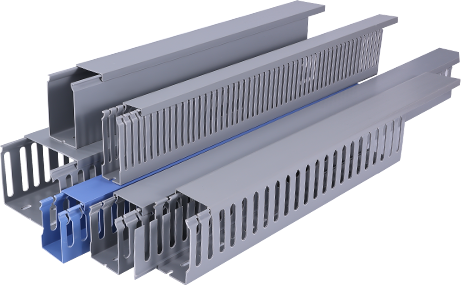

In the intricate world of control panel design and manufacturing, every component plays a critical role in ensuring optimal performance, safety, and longevity. Among these components, small wiring duct for control panels emerges as an unsung hero, quietly revolutionizing how electrical systems are organized and maintained. This compact yet versatile solution addresses the growing need for space-efficient wiring management in modern control panels, where real estate is at a premium and precision is non-negotiable.
Small wiring duct, typically ranging from 10mm to 50mm in width, is engineered to accommodate the dense wiring configurations common in today's control panels. Unlike their larger counterparts, these ducts are specifically designed to fit into tight spaces without compromising on functionality. They serve as dedicated pathways for cables, separating power lines from signal wires, and preventing electromagnetic interference (EMI) that can disrupt sensitive electronic components. By creating a structured layout, small wiring duct simplifies troubleshooting processes, allowing technicians to quickly identify and resolve issues without sifting through a tangled mess of wires.
One of the key advantages of small wiring duct lies in its ability to enhance safety standards. Control panels house high-voltage components, and unorganized wiring increases the risk of short circuits, overheating, and electrical fires. By enclosing wires within a flame-retardant duct, the risk of accidental contact is significantly reduced. Many small wiring ducts are constructed from self-extinguishing materials such as PVC or polyamide, which meet international safety standards like UL94 V-0. Additionally, the smooth inner surfaces of these ducts minimize friction, reducing wear and tear on cables over time, thus extending their lifespan and reducing maintenance costs.
Efficiency is another cornerstone of small wiring duct's appeal. In industries where downtime translates to significant financial losses, quick access to components is essential. Small wiring duct features snap-on lids or removable covers, allowing technicians to easily access individual wires without disassembling the entire panel. This modular design also facilitates future modifications, as new cables can be added or removed without disrupting existing configurations. For control panel manufacturers, this translates to faster assembly times and reduced labor costs, as wiring can be pre-organized and routed through ducts before installation.
The versatility of small wiring duct extends beyond basic cable management. Many models offer customizable features such as dividers, which allow for further segregation of wires based on voltage, current, or function. This level of organization is particularly beneficial in complex control systems where multiple circuits operate simultaneously. Some ducts also include labeling slots or integrated markers, enabling clear identification of each wire, which is crucial for compliance with industry standards and regulatory requirements. Whether used in industrial automation, renewable energy systems, or medical equipment, small wiring duct adapts to diverse applications with ease.
When selecting small wiring duct for control panels, several factors must be considered to ensure optimal performance. The material choice depends on the operating environment: for panels exposed to extreme temperatures, high-temperature resistant ducts are ideal, while chemical-resistant options are suitable for harsh industrial settings. The duct's profile, whether slotted, solid, or perforated, should align with the specific needs of the wiring system—slotted ducts, for example, allow for easy cable insertion and removal, while solid ducts provide maximum protection. Additionally, compatibility with other panel components, such as terminal blocks and connectors, ensures a seamless integration into the overall design.
In conclusion, small wiring duct for control panels represents a critical investment in the reliability and longevity of electrical systems. By combining space efficiency, safety, and ease of maintenance, these ducts address the evolving challenges of modern control panel design. As industries continue to push the boundaries of miniaturization and complexity, the demand for innovative wiring management solutions will only grow. Small wiring duct stands at the forefront of this evolution, proving that even the smallest components can make the biggest difference in ensuring the smooth operation of control panels across sectors. For engineers, technicians, and manufacturers alike, embracing this technology is not just a choice—it's a strategic decision to future-proof their systems and stay ahead in an increasingly competitive landscape.