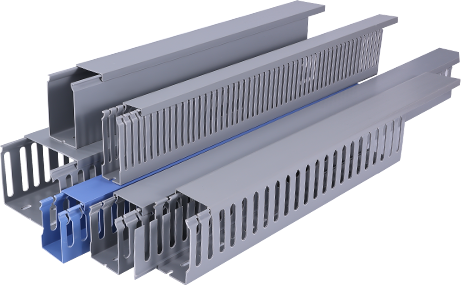

In the fast-paced world of data centers, where performance and reliability are paramount, effective cable management plays a crucial role in maintaining optimal operations. Among the various components that contribute to a well-organized data center, wiring ducts stand out as essential tools for managing the complex web of cables that power, connect, and control critical systems. Choosing the best wiring duct for data centers requires careful consideration of several key factors to ensure long-term efficiency, scalability, and safety.
First and foremost, material selection is a critical aspect when evaluating wiring ducts. Data centers generate significant heat, and cables can become hot under heavy loads. Therefore, the best wiring ducts are typically made from flame-retardant materials such as PVC or metal. PVC ducts are lightweight, cost-effective, and offer excellent insulation properties, making them suitable for general-purpose cable management. Metal ducts, on the other hand, provide superior durability and fire resistance, which is especially important in high-density environments where fire safety is a top priority. Additionally, metal ducts can help with heat dissipation, reducing the risk of overheating and extending the lifespan of cables.
Another important factor to consider is the design and configuration of the wiring duct. The best wiring ducts for data centers are modular and customizable, allowing for easy installation and reconfiguration as the data center evolves. Modular systems enable technicians to add or remove sections as needed, making it easier to adapt to changing cable layouts or new equipment installations. Furthermore, wiring ducts with multiple compartments or channels help separate different types of cables, such as power, data, and fiber optic, reducing interference and improving signal integrity. This separation also simplifies troubleshooting and maintenance, as technicians can quickly identify and access specific cables without disrupting the entire system.
Scalability is another key consideration. As data centers grow and expand, the number of cables increases exponentially. The best wiring ducts should be able to accommodate this growth without requiring a complete overhaul of the cable management system. Look for ducts with expandable designs, such as those with removable covers or adjustable widths, which allow for easy addition of new cables. Additionally, wiring ducts that can be stacked or mounted in various configurations provide flexibility in utilizing vertical and horizontal space, maximizing the efficiency of the data center's layout.
Ease of installation and maintenance is also crucial. The best wiring ducts are designed with user-friendly features such as snap-on covers, tool-less fasteners, and clear labeling options. These features simplify the installation process, reducing labor costs and minimizing downtime. Moreover, easy access to cables through removable covers or hinged lids makes maintenance tasks, such as cable replacement or troubleshooting, more efficient. Clear labeling systems, such as color-coded channels or printed labels, help technicians quickly identify and locate specific cables, further streamlining maintenance operations.
In addition to these practical considerations, the best wiring ducts for data centers should also meet industry standards and regulations. Compliance with standards such as TIA-942 (Telecommunications Infrastructure Standard for Data Centers) ensures that the cable management system is designed to support high-performance networks and meet safety requirements. Adhering to these standards not only ensures the reliability of the data center but also helps in obtaining certifications and maintaining a competitive edge in the industry.
When evaluating different wiring duct options, it is also important to consider the specific needs of the data center. For example, data centers with high-density server racks may require wiring ducts with higher load capacities to support the weight of multiple cables. Similarly, data centers that handle sensitive data or critical applications may prioritize wiring ducts with enhanced security features, such as lockable covers, to prevent unauthorized access to cables.
In conclusion, selecting the best wiring duct for data centers involves a comprehensive assessment of material, design, scalability, ease of installation, and compliance with industry standards. By carefully considering these factors, data center operators can ensure that their cable management system is efficient, reliable, and capable of supporting the evolving needs of their operations. Whether choosing PVC or metal ducts, modular or fixed designs, the goal is to create a cable management system that minimizes downtime, reduces maintenance costs, and maximizes the performance of the data center. With the right wiring duct in place, data centers can operate at peak efficiency, ensuring the seamless flow of data and the reliability of critical systems.