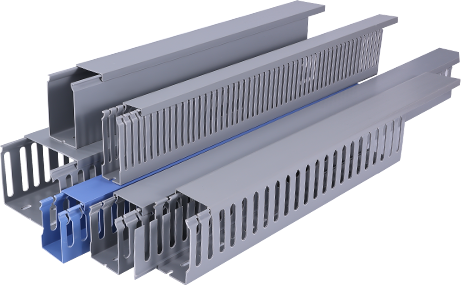

In the world of control panel design and electrical engineering, the smallest components often play the most critical roles. Among these unsung heroes is the small wiring duct for control panels—a seemingly insignificant element that serves as the backbone of organized and efficient electrical systems. This article explores the importance, applications, and benefits of small wiring ducts in control panel design.
Control panels are the nerve centers of various industrial and commercial systems, housing complex networks of wires, cables, and components. Without proper organization, these systems can quickly become chaotic, leading to maintenance challenges, safety hazards, and reduced operational efficiency. Small wiring ducts address these issues by providing a structured pathway for routing and managing wires within the limited space of control panels.
One of the primary advantages of small wiring ducts is their space-saving design. Control panels often have limited real estate, and traditional wiring methods can quickly consume valuable space. Small ducts, typically ranging from 10mm to 50mm in width, allow for efficient use of vertical and horizontal space, enabling engineers to fit more components without compromising on organization. This compactness is particularly beneficial in modern control panels, where miniaturization and high-density component placement are becoming increasingly common.
Another key benefit is the enhanced safety they provide. Exposed wires in control panels pose significant risks, including short circuits, electrical fires, and accidental contact. Small wiring ducts enclose and protect wires, reducing the likelihood of these hazards. They also prevent wires from rubbing against sharp edges or moving parts, which can cause insulation damage over time. By keeping wires neatly contained, these ducts contribute to a safer working environment for technicians and operators.
Small wiring ducts also simplify maintenance and troubleshooting. When wires are organized in ducts, technicians can quickly identify and access specific circuits without having to untangle a web of wires. This not only saves time during routine maintenance but also reduces the risk of accidental disconnections or damage to other components. Additionally, labeled ducts make it easier to trace wires, ensuring that repairs and upgrades can be performed with minimal disruption.
The versatility of small wiring ducts is another notable feature. They come in various materials, including PVC, aluminum, and steel, each offering unique benefits. PVC ducts are lightweight, cost-effective, and resistant to corrosion, making them ideal for general-purpose applications. Aluminum ducts provide excellent heat dissipation, which is crucial in high-temperature environments. Steel ducts, on the other hand, offer superior durability and protection against physical damage, making them suitable for heavy-duty industrial settings.
In terms of installation, small wiring ducts are designed for ease of use. They typically feature snap-on lids, pre-drilled mounting holes, and modular designs that allow for quick assembly and customization. This flexibility enables engineers to adapt the duct layout to the specific needs of the control panel, whether it's a simple residential system or a complex industrial automation setup.
Beyond their functional benefits, small wiring ducts also contribute to the aesthetic appeal of control panels. A well-organized panel with neatly routed wires presents a professional appearance, which is important for customer satisfaction and compliance with industry standards. Moreover, a clean and organized layout reflects a commitment to quality and attention to detail, which can enhance the reputation of the design team or manufacturer.
In conclusion, small wiring ducts for control panels are far more than just simple conduits. They are essential components that ensure the safety, efficiency, and reliability of electrical systems. By providing a structured and protected pathway for wires, these ducts simplify maintenance, reduce risks, and optimize space utilization. As control panel technology continues to evolve, the role of small wiring ducts will only become more critical, solidifying their status as an indispensable tool in electrical engineering and system design.